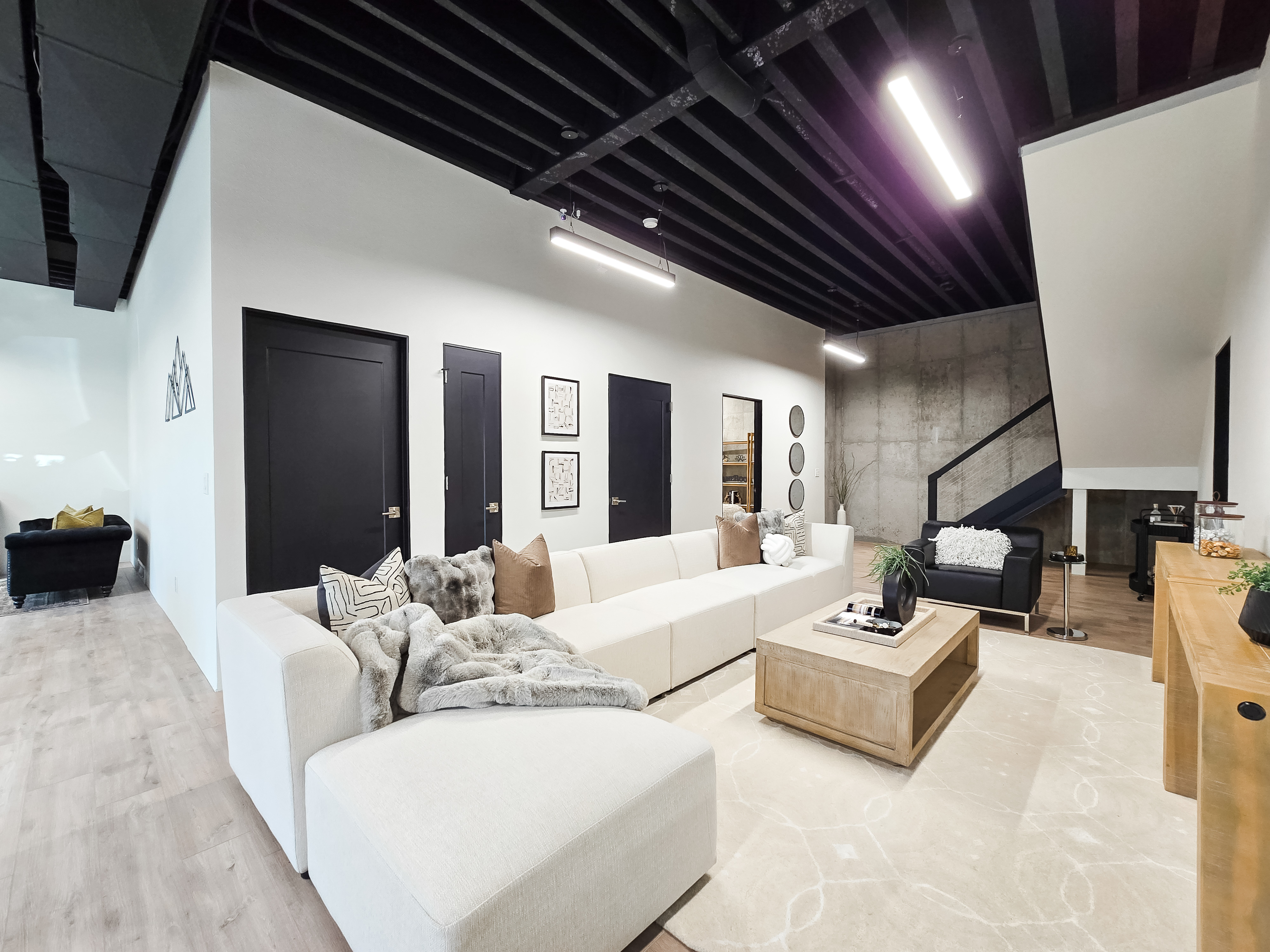
The last business moved out over a weekend, and the suite still shows where every desk used to sit. Pale rectangles mark the carpet, and power boxes dot the floor in rows. Nothing in the room shows a buyer how a new team would use it. From Boone, our team at Sell It Well Home Staging makes the trip to stage vacant office suites for owners selling in Ames. As commercial real estate staging specialists, we give that buyer the reference points the empty suite is missing.
Why Does an Empty Office Look Too Small?
Most owners expect emptiness to make an office look roomy, and the opposite happens once a buyer walks in. People judge a room's size against the objects inside it, and an empty suite gives them nothing to measure against. Walls look closer and corners look tighter, so a buyer planning for a team of eight concludes the space won't hold them. Several well-placed desks and a small meeting table bring the proportion back, and the suite reads at its true size. A buyer who leaves believing the suite is too small has no reason to come back and measure it.
Which Type of Business Should the Staging Suggest?
We tailor every office to the type of business most likely to purchase the suite, and the furniture changes with that choice. For a therapy practice, we set a calm waiting area and two chairs at a comfortable distance in a private room. Law firms get a conference table in the largest room and a desk in each private office. For a creative team, we furnish the open floor with shared worktables and room to spread out. When a suite could go either way, we count the private offices, since a therapy group needs more closed doors than a small agency does.
Where Will Visitors Walk, and Where Does the Light Land?
Our first walk through an empty suite traces how people will move through it and where the daylight falls. We follow the route a client would take from the front door to a meeting room, and we keep that route clear and obvious. A buyer who walks that route easily can picture their own clients doing the same on a busy morning. Desks go where the daylight reaches them, and the darker interior corners take storage or a small break area. Glare across a desk is a detail buyers notice on a sunny afternoon tour, so we angle desks away from it. An office with good window light photographs far better once a desk sits in it, because the light finally has something to fall on.
What Furniture Goes Into a Staged Office?
We use minimal, clean-lined pieces that look professional without crowding the floor. Simple artwork on the walls adds warmth, and every desktop stays clear so a buyer can picture their own work on it. Heavy executive desks and overstuffed chairs make a room look smaller, which undoes the whole reason for staging it. Each desk or chair we bring either marks a workstation or shows where a client would sit. A buyer should be able to read each room from the doorway, without a broker narrating what the furniture is for.
How Fast Can an Empty Office Be Ready?
We stage small and medium offices within one to two days. Larger commercial sites take a little longer, and we finish them in less than a week, depending on size. That speed lets a furnished suite go into the listing photos in place of an empty one. Buyers browsing commercial listings then see a working office in the first photo, and that photo is the one they use to decide whether your suite makes their tour list.
Call Us While the Suite Sits Empty
Phone Sell It Well Home Staging at (515) 238-3795 as soon as the last tenant moves out of your Ames suite. If the suite still has its old reception desk or conference table, mention it, and we'll tell you whether a piece the last tenant left behind can stay in the plan. The sooner we see the suite, the fewer buyers tour it with only the old tenant's outline in the carpet.